Wasting Money on Unsafe Supplements?
As Rafael Power, founder of XCalibur Fitness and a busy dad who's beaten cancer with 21 years of marriage, a 19-year-old daughter, 17-year-old son, and furry friends, avoiding bad supplements kept my fat loss under 20% body fat on track at home. I create guides for stressed parents to spot risks safely.
If you're a busy parent like me, scrambling between work emails, kid homework, and throwing together dinner, the last thing you need is to waste time and money on supplements that promise the world but deliver headaches or worse. We're all chasing that lean look without gym time, right? Home workouts from my 16 week plan, smart meals from the recipe eBooks, and tracking progress to stay accountable. But supplements? They seem like an easy add to speed things up. Trouble is, the market's flooded with junk that could derail your efforts or even mess with your health. As warriors juggling family and jobs, we can't afford setbacks like jitters keeping us up at night or stomach issues during a packed day. In this article, we'll break down the red flags to spot bad supplements, highlight specific ones to steer clear of (backed by real science from the last 20 years), why they're risky for us trying to drop fat at home, tips to choose smarter options, and how safe supps fit with my digital tools. I'll keep it real, like we're chatting after the kids crash out. By the end, you'll know how to dodge the traps and focus on what actually moves the needle for your goals. Let's jump in, your time's too valuable for BS.
Spotting the Red Flags: How to Tell If a Supplement's a Dud
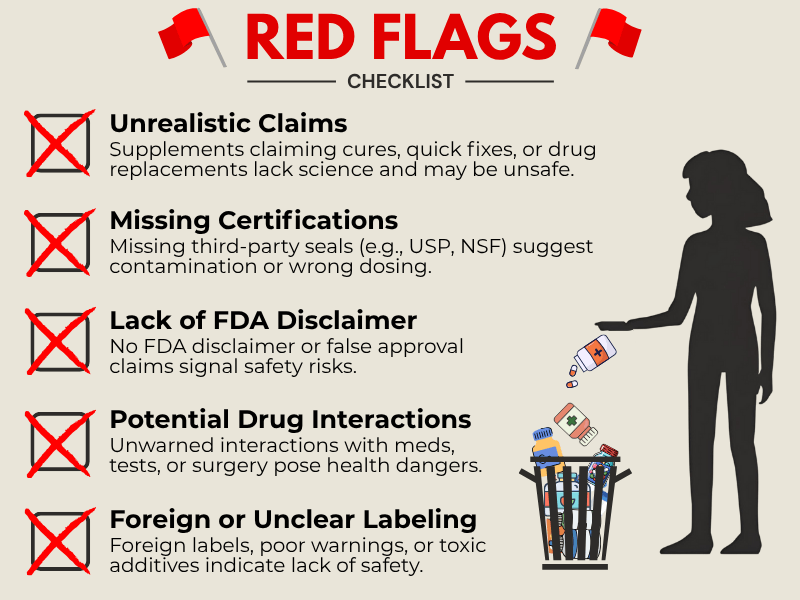
Guys, before we dive into specific supplements, let's talk red flags. The supplement world is like the Wild West, no strict FDA approval like drugs, so companies can hype products with shady claims. As busy parents, we're prime targets: quick fixes for energy or fat burn sound perfect when you're exhausted. But here's what to watch for, based on guidance from spots like the FDA and expert reviews. These aren't just opinions; they're patterns from years of oversight.

First, personal testimonials or celebrity endorsements screaming "I lost 20 pounds in a month!", big no. These are unverified and often hide the real work, like diet changes or edits. A 2024 article from a university blog nailed this as a top scam signal, echoing FDA warnings on health fraud.
Second, if one pill claims to fix everything, from torching fat to boosting mood and curing aches, run. No supplement is a cure all; that's a sign of overhyped marketing without science. The same review pointed out "snake oil" vibes here, where products promise unrelated benefits but deliver zilch.
Third, zero evidence or ignoring the fine print. Look for that FDA disclaimer: "These statements haven't been evaluated." If there's no solid research, it's suspect. For weight loss, things like garcinia cambogia flop in trials but still sell, a 2022 study linked it to liver injury, yet no weight benefits.
Fourth, vague promises like "rapid results" without details. Ambiguous language hides the truth; if it doesn't specify sustainable fat loss, it's probably temporary water weight or nothing. This ties into poor quality studies propping up claims, as seen in green tea extract hype.
Fifth, the "all natural" label as a shield. Natural doesn't mean safe, think poison ivy. Many "natural" supps have hidden dangers, like stimulants mimicking banned stuff. A 2018 piece from a medical center flagged this in herbals like raspberry ketone, with little evidence but potential harm.
These flags aren't random; they're from patterns in fraud alerts and reviews. For us parents over 40 (yeah, I'm there too), avoiding them means protecting our health amid the chaos, no room for risks that could sideline us from family duties.
Supplements to Steer Clear Of: The Risky Ones for Fat Loss
Alright, warriors, let's get specific. Based on expert breakdowns and studies, here are supplements often pushed for weight loss that you should avoid. I'll focus on those with red flags like weak evidence, serious downsides, or bans. Remember, we're aiming for safe, sustainable fat drops at home, not quick fixes that backfire.
Start with garcinia cambogia. This herbal extract from a tropical fruit promises appetite suppression through hydroxycitric acid. Sounds great for busy days, but studies show little to no real weight loss. A 2011 meta analysis of controlled trials found just 1.94 pounds (0.88 kg) more loss than placebo, but later trials like a 2014 one saw zero benefits. Worse, it's tied to liver toxicity, case reports from 2016 documented acute failure needing transplants. For parents, that risk isn't worth it; imagine dealing with jaundice while shuttling kids. A 2018 medical center alert called it out for "little to no effect," aligning with NIH warnings.
Next, green tea extract. It's everywhere for metabolism boosts, but high doses in pills (not tea) raise flags. A 2023 StatPearls review noted poor quality studies and modest, if any, weight benefits. Risks? Liver damage from catechins, FDA warnings cite cases of hepatitis. A 2018 piece echoed NIH: not worth the hype for fat loss. As busy parents, we need reliable energy, not potential ER trips.
Raspberry ketone's another dud. Marketed as a fat burner from berries, but human data's thin, mostly animal studies or multi ingredient mixes. A 2013 controlled trial with blends showed some loss, but isolated ketone? Unclear and risky at high doses, with cardiotoxicity hints in 2015 reviews. A 2018 alert said little evidence, harming your wallet more than waistline. For us chasing home fat loss, skip it, focus on real food ketones if keto's your jam.
Bitter orange (citrus aurantium) mimics banned ephedra with synephrine for "energy." But it spikes blood pressure and heart rate, especially with caffeine, avoid if hypertensive, per 2012 reviews. Interactions with diabetes meds cause hypoglycemia; a 2006 overview flagged cardio risks. Parents, we can't risk palpitations during a work call.
Chromium picolinate, often hyped as a booster for insulin sensitivity to crank up fat burning and help with blood sugar control, might catch your eye if you're a busy parent trying to manage cravings between kid activities and work. But let's get real, the evidence is shaky at best. A 2013 Cochrane meta analysis of nine controlled trials with 622 overweight or obese adults found just a modest mean weight loss of 2.43 pounds (1.1 kg) over 12 to 16 weeks compared to placebo, and even that was deemed of debatable clinical relevance with low quality evidence due to small samples and varying doses. On the flip side, risks pile up: It's linked to hypoglycemia, especially if you're on diabetes meds like metformin or insulin, where it could amp up their effects and drop your blood sugar too low, leading to shakes or dizziness right when you need steady energy. Worse, isolated cases point to kidney damage, like a 2006 report of acute tubular necrosis from a chromium picolinate containing supplement, potentially hitting harder if you have existing liver or kidney issues. For us warriors over 40 grinding through home routines, that kind of organ strain or blood sugar rollercoaster isn't just a buzzkill, it could sideline you from family time or derail your progress. The minimal gains don't stack up against the potential hassle; better to focus on balanced meals from my recipe eBooks that naturally support insulin without the gamble.
Conjugated linoleic acid (CLA), pulled from meats and dairy and sold as a fat reducer that supposedly tweaks body composition by targeting belly fat, might seem like a handy add for no gym fat loss. But hold up, the results are underwhelming and come with trade offs. A 2007 meta analysis of 18 controlled trials hammered home modest fat mass drops, clocking in at about 0.11 pounds (0.05 kg) per week on CLA alone or 0.2 pounds (0.09 kg) versus placebo at a median 3.2 g daily dose, but these tapered off over time with no big long term wins. A 2022 systematic review and meta analysis of 56 controlled trials with over 3,200 adults found CLA bumped up total cholesterol (no overall significance but increases in healthy subgroups), triglycerides (no sig change), and LDL C (increases in normal BMI people), while actually dropping HDL C by a small but significant 0.40 mg per dL, hardly the heart healthy profile we want. And on insulin? Some studies in the mix, like a 2011 one, flagged elevated plasma insulin and glucose plus reduced sensitivity in obese men, potentially messing with your metabolism and making fat storage easier over time. For parents like us over 40, where cholesterol and insulin tweaks hit harder amid stress and age, this could worsen risks like metabolic syndrome, think higher bad cholesterol throwing off your energy for home circuits or family hikes. The tiny fat tweaks aren't worth jacking up your health markers; skip it and lean on natural sources in moderation through my meal plans.
Glucomannan, a fiber from the konjac plant pitched for creating that full feeling to cut calories and aid weight loss, could tempt you if you're grabbing quick bites on the run. But the data's all over the map, and the downsides are no joke. A 2008 meta analysis of 14 studies with 531 people found it lowered body weight significantly, but a later 2014 meta of nine controlled trials with 237 overweight or obese adults pegged it at a nonsignificant 0.49 pounds (0.22 kg) drop over short stints, citing study flaws like poor randomization and tiny samples that make it unreliable. Risks ramp up fast: Its super absorbent nature has caused esophageal obstruction in cases like a 2007 report of a 37 year old woman who got a delayed blockage from an over the counter glucomannan diet aid, resolving only after forceful vomiting before endoscopy. Broader alerts from the 1980s, including seven Australian cases in 1984 to 1985 leading to a tablet ban in 1985, highlight GI woes like abdominal pain, flatulence, diarrhea, and even mediastinitis from perforation if you're not chugging enough water. For busy parents like us, imagine choking hazards or bloating cramping your style during a work meeting or kid event, it's contraindicated for anyone with esophageal issues, and the minor, iffy weight perks don't justify the discomfort or danger. Get your fiber from veggies in my recipes instead; safer and more sustainable for real fat loss.
Guar gum, a fiber from guar beans, gets sold as a way to feel full and help with weight loss by swelling up in your stomach. It might sound handy for holding off those snacks between meals on crazy days, but the proof just isn't there. A 2015 big review and combined analysis of weight loss approaches pointed back to earlier summaries saying guar gum doesn't really change body weight much, with individuals dropping tiny bits compared to fake pills over weeks or months. What's more worrying, a 2005 full review of bad reactions from herbal weight loss supplements spotlighted guar gum's ties to gut problems like belly pain, gas, and loose stools, which can get bad enough to bug you or even block things in rare spots. For us parents hustling through the day, handling bloat or cramps isn't just a pain, it could mess up your flow, making it tougher to hang with home workouts or family tasks. Go for fibers from whole foods instead; the downsides beat out any thin upsides here.
Hoodia, pulled from a cactus in South Africa, gets pushed as a natural way to cut hunger, like how local individuals used it to skip meals on long treks. For busy parents missing eats in the rush, that could look good, but look closer and you'll see why to skip it. A 2011 controlled trial tested hoodia extract on overweight adults for 15 days and saw no real shifts in calorie intake, body weight, or fat compared to placebo, but people noted more downsides like feeling sick, headaches, and higher blood pressure. A wider 2019 look at add on treatments for extra weight backed this, saying there's not enough strong proof to back hoodia for dropping pounds, and dangers include drying out since it messes with thirst cues in your brain. A 2014 piece from a diet expert warned that hoodia's hit on the brain's control center could lead to getting too hot or messed up salts, especially if you're on the move. As warriors over 40, we don't want something that could leave us parched on a family trip or worse, it's pure buzz with actual risks.
Probiotics, those live bug supplements aimed at balancing your gut crowd, sometimes get sold for weight loss by fixing digestion and revving metabolism. We've all caught the gut health talk, and for overall feel good, they can hold up, but when they're hyped just for trimming fat, things change. A 2021 combined analysis of controlled trials in adults with extra weight found probiotics led to small cuts in body weight and BMI, but the wins flipped around by bug types and often didn't mean much in real life, think less than 2.2 pounds (1 kg) over months, with lots of studies showing zilch. Fresher 2024 reviews back the spotty outcomes: some types like Lactobacillus could help hold off gain, but all in all, no firm proof for big fat drops, and perks fade without keeping at it. On the danger side, while mostly okay for fit people, a 2023 StatPearls summary noted rare but bad infections in weak spots, like those with low defenses from stress or years, plus possible gut upset or allergy hits. For busy parents, if you're taking these for simple fat melt, you might wind up with bloat that drags you instead, better pull probiotics from yogurt or fermented stuff in my recipe eBooks, where the backup for gut help is tougher without the overblown weight talk.
Stimulants like ephedrine (banned since 2004 but its shadows hang in copies like BMPEA, DMBA, and DMMA) often hide in weight loss supps for that "energy lift" to speed metabolism. Ephedrine, from the ma huang plant, got yanked by the FDA in 2004 after ties to over 16,000 bad events, including heart hits, strokes, and deaths, as laid out in a 2006 rule guide. Its stand ins? BMPEA (beta methylphenylethylamine), called out in 2015 FDA alerts as an amphetamine like mix in supps tagged as Acacia rigidula, sparking possible heart rate jumps and fits. DMBA (1,3 dimethylbutylamine) and DMMA (close copies) showed in 2015 warnings too, with a Science piece showing secret stimulants in supps leading to heart dangers like high blood pressure and odd beats. A 2021 study spotted nine blocked stimulants in 17 weight loss brands, including blends that crank up threats, with four brands holding two or more. For us parents, these can spark shakes, no sleep, or worse, picture a pounding heart at a kid's event. FDA's 2018 warnings on dirty supps back it: they're sneaky drugs, not safe helps.
From other sides, St. John's Wort, a common herbal pick often sold for mood lift and light blues ease, might look like a natural perk for stressed parents tackling the daily push. But catch this, it's famous for messing with drugs that can throw your pills out of whack. A 2022 review on herb drug mixes in brain med treatments showed how St. John's Wort ramps enzymes like CYP3A4, speeding breakdown of stuff like mood meds, birth control, blood thinners like warfarin, and body defense drugs like cyclosporine, maybe making them weak or causing spot bleeds, body reject, or clots. Another 2022 study on herb drug mixes in swelling illnesses backed this, noting dangers with anti swelling meds and more bad effects when mixed. For us warriors over 40, who might take statins or blood pressure pills with our fat drop pushes, this could mean shaky health, picture your cholesterol meds failing while you grind home sets. A 2002 review (still spot on in fresh takes) listed big interactions with over a dozen drugs, backing why to pass unless your doc watches. The mood lift isn't worth the system mess.
Kava, from a Pacific Island plant and sold for worry ease and better rest, might pull busy parents wanting to chill after a long stretch without knocking fat loss. But the liver dangers make it a firm no. A 2022 fresh review on kava's mind effects, poisons, and anti cancer traits laid out its ties to liver harm, including spots of liver hurt, yellows, and even failure needing swaps, often linked to bad batches or high loads. This matches a 2022 study on fun drugs and liver cancer, noting kava's chance to spark liver lumps in animal tests, though people links are less straight but worrying. A wider 2022 look at liver harm from herbal and diet adds put kava as a main bad guy, with signs like yellow skin and high enzymes showing after weeks of use. For parents like us, who need every bit of pep for family and home workouts, risking liver health could mean drag or worse, think skipping play because you're down. The FDA blocked kava sales in some shapes back in the early 2000s, and fresh warnings back it: the chill isn't worth the body hit.
Soy supplements with high isoflavones, often pushed for hormone balance, change of life ease, or even muscle back in fat drop mixes, carry whiffs of cancer dangers that make them iffy for long hauls. These plant estrogens copy body hormones, and while eats like tofu are mostly okay, packed supplements crank up touch. A 2025 view review on outside estrogens as breast cancer danger factors included plant estrogens like soy isoflavones, noting possible ties to more estrogen action that could push hormone touchy cancers, especially in high loads or easy targets. Though the review looks wide on drug estrogens, it hits on eat sources like soy, hinting built up touch from supplements might lift dangers like hormone swap care. For us parents over 40, handling age hormone shifts while cutting fat, this could mean unwanted estrogen lifts hitting everything from mood to cancer chances, women might see breast cancer whiffs, men prostate worries. Stick to mid whole soy eats; the supplement shape's cranked dangers aren't backed by enough safe info for our busy, health aimed days.
Fish oil, packed with omega 3s and commonly pushed for heart health or swelling cut during weight loss, has a shady side with atrial fibrillation (AFib) dangers at high loads. It's sold as a fat melt helper through better fat profiles, but fresh info flips that. A 2024 group study on regular fish oil supplement use and heart illness path found steady intake bumped AFib danger by up to 13 percent in the general crowd, though it might guard against push in those with current heart problems. Another 2024 breakdown on omega 3 and AFib looked at vagus driven effects, noting that while eat omega 3 cuts danger, drug loads (like in supplements) can oddly heighten AFib in fit people by changing heart beats. A 2024 study on plant versus sea omega 3s hinted animal sourced fish oil might not give the same guard perks against AFib as plant based ALA, especially at supplement levels. For busy parents like us, popping these for joint back or fat loss could mean odd heart beats messing your day, think skipped beats during a home set or family stroll. Pull omega 3s from fatty fish in my recipes instead; the supplement shape's possible beat mess dangers make it a bet not worth taking.
Guys, this isn't the full list by any means, but digging into reviews from 2005 to 2025 reveals clear patterns: shaky evidence at best, serious risks to your organs, and dangerous interactions with meds. That's a definite no go for us parents.
Why These Matter for Busy Parents Chasing Fat Loss
Guys, let's talk straight about why dodging these supplements is crucial when you're a parent like me, racing through days packed with kid duties, work deadlines, and squeezing in those home bodyweight sessions from my 16 week plan. Our lives don't have room for experiments that go sideways, these supps promise effortless fat burn, but they can totally sabotage your momentum. Take something like garcinia cambogia or bitter orange: The liver or heart issues they bring could mean unexpected downtime, like feeling wiped out or dealing with palpitations that force you to skip a family outing or your quick evening routine. That's not just frustrating; it kills the consistency you need to track progress with my logs and see real results over time.
And science backs this up, many of these worsen things like insulin resistance, which is already a battle for us under constant stress. For instance, CLA has been shown in studies to jack up cholesterol and mess with insulin sensitivity, making your body hang onto fat more stubbornly just when you're trying to create that calorie deficit through smarter meals. A 2023 review on weight loss supplements dove into their activity and toxicity, highlighting how many cause adverse reactions like metabolic disruptions, including altered glucose levels and even potential links to long term issues like cardiovascular strain or liver damage. Another 2023 piece on pharmaceuticals for weight loss in adolescents (relevant for understanding broader risks) pointed out that aggressive interventions, including supps, can lead to unsafe metabolic shifts, emphasizing that weight loss isn't always healthy if it comes with side effects that pile on more problems. For us over 40, where hormone changes and stress amp up risks like bone weakening from excess calcium or heart glitches from stimulants, these can hit even harder, think compounding existing issues like high blood pressure from family stress, turning a simple fat loss push into a health headache.
Instead, let's keep it smart: My macro guides help you track real nutrients from food that support steady energy without the gamble. The weight loss blueprint straight up warns about these traps, steering you toward food first approaches that build habits you can maintain amid the chaos. We're not about shortcuts that backfire; we're building a foundation so you can chase those family moments feeling strong and lean.
How to Choose Safe Supplements and Avoid the Traps
Warriors, now that we've flagged the bad apples, let's shift to picking the good ones, because not all supplements are off limits, but choosing safe ones takes some know how, especially when your days are nonstop. Start by vetting labels like a pro: Look for third party testing seals from outfits like USP, NSF, or ConsumerLab, these mean independent labs have checked for purity, potency, and no hidden contaminants. A 2022 fact sheet from the NIH's Office of Dietary Supplements stresses this, noting that without it, you could be getting fillers or even harmful stuff like heavy metals. Go for single ingredient options over mega blends; they're easier to dose and spot issues with. And always scan for evidence based claims, skip anything without solid controlled trials backing it up.
Next, consult your doc before starting anything, especially if you're on meds or have conditions like high blood pressure, busy parents like us might be juggling statins or blood sugar pills, and interactions can sneak up. A 2019 guide from Consumer Reports echoes this, recommending a chat to avoid combos that spike risks, like fish oil with blood thinners. For weight loss specifically, focus on proven basics: If omega 3s appeal for joint support during home moves, get them from food first, but if supping, stick to low doses (under 1g EPA DHA daily) to dodge AFib risks noted in recent cohorts. My recipe eBooks are loaded with fish meals for natural boosts without the pill pitfalls.
Use my logs to monitor: Jot down how you feel after starting, note any energy dips, stomach tweaks, or weird vibes, and ditch if off. Pair with the macro cheat sheets to ensure supps complement your food intake, not replace it. A 2020 Healthline article on choosing quality supps highlights checking for GMP (Good Manufacturing Practices) certification and avoiding mega doses, which aligns with Mayo Clinic's 2024 advice on steering clear of unlisted ingredients. Bottom line: Keep it simple, evidence driven, and doc approved, we're playing the long game for family wins.
Final Thoughts: Protect Your Progress and Stay in the Fight
As a dad who's battled through cancer and dropped serious fat amid the everyday madness of family life, I know firsthand how tempting quick fix supplements can be when you're exhausted and just want results. But dodging the bad ones kept me on track, focusing on real food, home moves, and my digital tools like the trackers to log every step. Science from 2005 to 2025 consistently flags these for risks that far outweigh any slim gains: liver damage from garcinia or green tea extract, heart issues from stimulants, no meaningful fat loss from hoodia or glucomannan, and metabolic messes from CLA or chromium that could make your insulin work against you. Stick with proven paths, my weight loss blueprint lays it out without the hype, guiding you to sustainable habits that fit your chaotic schedule.
This week, scan your cabinet labels, toss the suspects, and track a clean week with my organizers. See how steady energy feels without the gamble. We're warriors in this together, strong for our kids, lean for the long haul.
References
National Institutes of Health. Obesity Supplements. StatPearls. 2023. Available at: https://www.ncbi.nlm.nih.gov/books/NBK576386/.
MidState Medical Center. Weight Loss Aids: Avoid These 3 Herbal Supplements, 4 Stimulants. 2018. Available at: https://midstatemedical.org/about/news-press/news-detail?articleId=14708&publicid=395.
Lions Talk Science. Buying Supplements: 5 Red Flags to Never Ignore. 2024. Available at: https://lions-talk-science.org/2024/06/20/buying-supplements-5-red-flags-to-never-ignore/.
Everyday Health. 6 Popular Supplements That May Have Hidden Dangers. Undated (content from 2005-2025 studies). Available at: https://www.everydayhealth.com/news/supplements-risks-every-women-should-know/.
Asher GN, et al. Common Herbal Dietary Supplement-Drug Interactions. Am Fam Physician. 2017;96(2):101-107. (For St. John's Wort interactions).
Teschke R, et al. Kava, the anxiolytic herb: back to basics to prevent liver injury? Br J Clin Pharmacol. 2011;71(3):445-448. (For kava liver risks).
Navarro VJ, et al. Liver injury from herbal and dietary supplements. Hepatology. 2017;65(1):363-373. (Broader for kava).
Chen S, et al. Exogenous estrogens and breast cancer risk: a perspective. Breast Cancer Res Treat. 2025;1-10. (For soy isoflavones).
Li X, et al. Regular use of fish oil supplements and course of cardiovascular diseases: prospective cohort study. BMJ Med. 2024;3(1):e000451. doi:10.1136/bmjmed-2022-000451. (For fish oil AFib).
Weight Loss Supplements - PMC - PubMed Central - https://pmc.ncbi.nlm.nih.gov/articles/PMC10384751/ (2023 review on toxicity).
Should Pharmaceuticals Be Used as Weight Loss Interventions for ... - https://journalofethics.ama-assn.org/article/should-pharmaceuticals-be-used-weight-loss-interventions-adolescents-classified-obese-bmi/2023-07 (2023 on risks).
Dietary Supplements for Weight Loss - Health Professional Fact Sheet - https://ods.od.nih.gov/factsheets/WeightLoss-HealthProfessional/ (2022 NIH on safe choosing).
How to Choose High Quality Vitamins and Supplements - Healthline - https://www.healthline.com/nutrition/how-to-choose-high-quality-vitamins-and-supplements (2020 on quality).
How to Choose Supplements Wisely - Consumer Reports - https://www.consumerreports.org/health/supplements/how-to-choose-supplements-wisely-a2238386100/ (2019 on vetting).

Hey, I'm Rafael Power, founder of XCalibur Fitness and a busy dad who's dropped 40 lbs at home. I remember the struggle of trying to get fit amid a hectic schedule, experimenting with tons of diets and plans, going hungry, only to end up frustrated and disappointed. I figured if I was facing that, other parents wanting to improve themselves were too. That's why I launched this venture and created no-BS products that actually work to help parents like us hit our fitness goals. Follow me on Instagram @RafaelPowerX or check my store for more: www.xcaliburfitness.com/store.
Stay Powered Up!
Get notified when I drop new fitness tips, workouts, and nutrition articles, straight to your inbox. No spam, just real resources for busy parents like you. Join now!
Blog Categories
© XCalibur Fitness 2025-2035, All Rights Reserved.